Aug 12, 2026
What Is a Spirit Level
Learn how spirit levels work and compare common types for construction, installation, carpentry and DIY applications.
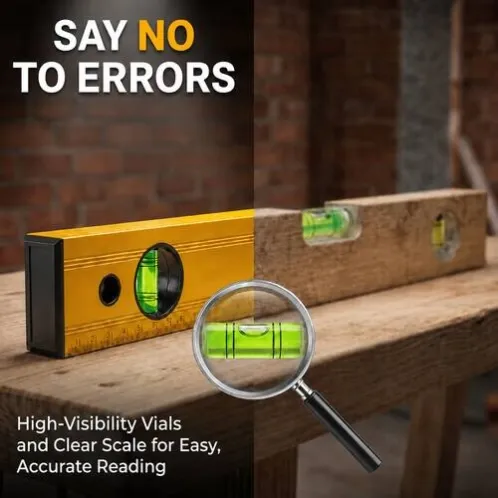
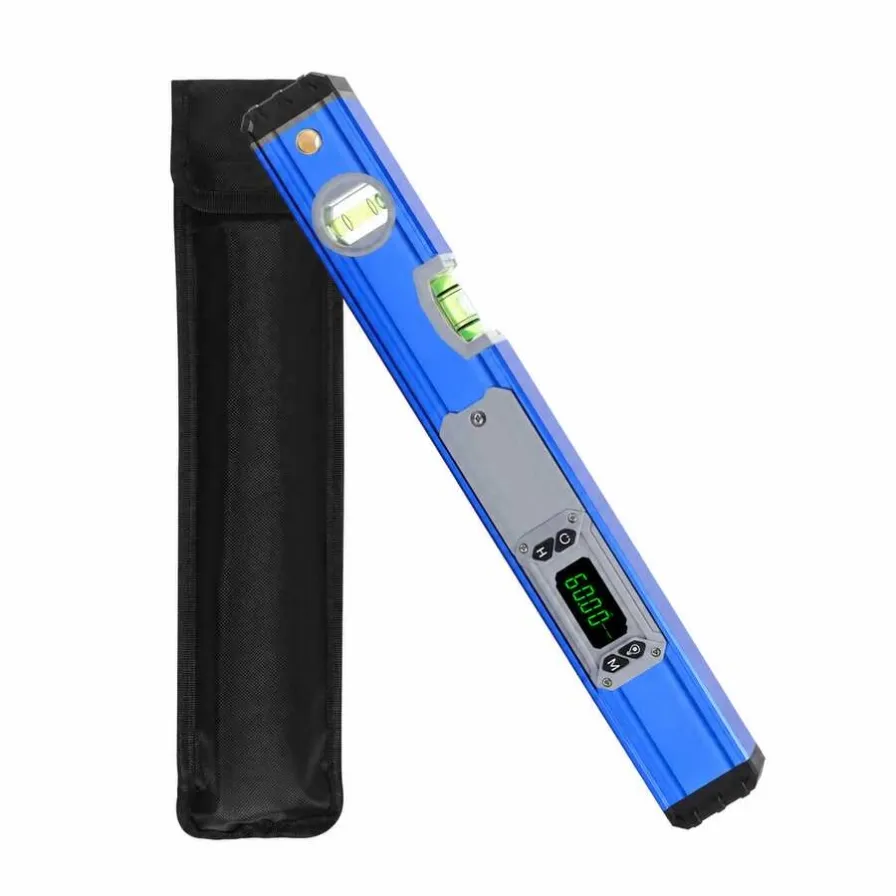
A spirit level, also known as a bubble level, is used to determine whether a surface is horizontal, vertical or positioned at a specific angle.
The tool contains one or more liquid-filled vials. Each vial has a small air bubble and two reference lines. When the bubble rests between the lines, the surface is correctly aligned in the direction being checked.
Most three-vial spirit levels provide:
A horizontal vial for checking level surfaces
A vertical vial for checking upright surfaces
A 45-degree vial for checking angled positions
COMMON TYPES OF SPIRIT LEVELS
Spirit levels are available in different designs to suit various applications.
BOX SPIRIT LEVELS
Box spirit levels feature a rectangular profile that provides a broad measuring surface. They are commonly used in construction, carpentry, furniture installation and interior decoration.
I-BEAM SPIRIT LEVELS
I-beam levels have a lightweight profile with reinforced sections. Their practical design makes them suitable for general construction, installation and maintenance work.
SPIRIT LEVELS WITH HAND GRIPS
Models with integrated hand grips are easier to carry, position and remove from a working surface. They are particularly convenient when using longer spirit levels.
MAGNETIC SPIRIT LEVELS
Magnetic models can attach to suitable metal surfaces, allowing the user to work with both hands. They are often used for metal fabrication, pipe installation and equipment assembly.
MINI SPIRIT LEVELS Compact spirit levels are designed for confined spaces and smaller installation tasks. They are useful for cabinets, shelves, electrical work and household projects.
SPIRIT LEVELS WITH RULER SCALES
Some models include printed or engraved measuring scales. These products combine basic length measurement and alignment checking in one convenient hand tool.