Aug 15, 2026
WHAT IS A GRINDING WHEEL AND HOW DOES IT WORK?
Learn how grinding wheels are made, how they work and how to select the right specification for efficient and safe metal grinding
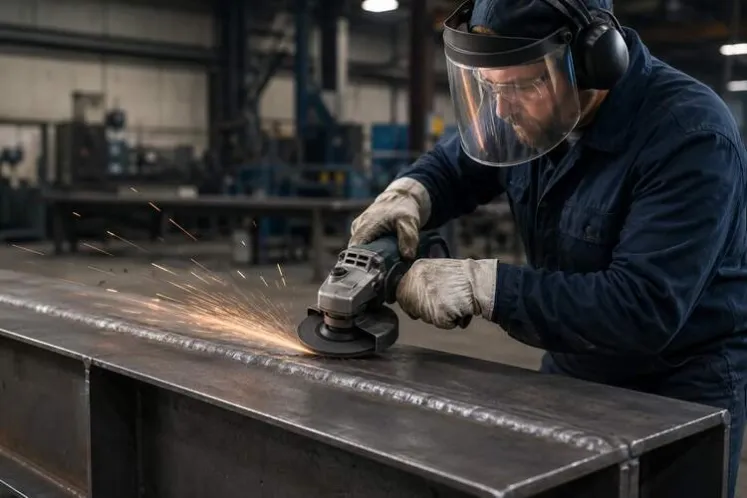
A grinding wheel is an abrasive tool designed for grinding, shaping, deburring and smoothing metal surfaces. It is commonly used with an angle grinder in metal fabrication, construction, maintenance and repair work.
Unlike a thin cutting wheel, which is designed to cut through material, a grinding wheel is thicker and intended for working on the surface of metal. It can remove welds, smooth rough edges, clean joints and prepare surfaces for further processing.
WHAT ARE GRINDING WHEELS MADE OF?
A typical grinding wheel contains abrasive grains, bonding materials and reinforcing fiberglass mesh.
The abrasive grains perform the actual grinding. Aluminum oxide is commonly used for carbon steel and general-purpose metalworking, while other abrasive materials may be selected for stainless steel or specialized applications.
The bonding material holds the abrasive grains together and influences the wheel’s cutting action, durability and wear rate. Fiberglass reinforcement helps improve structural strength during operation.
COMMON APPLICATIONS
Grinding wheels are widely used for:
- Removing weld seams
- Smoothing sharp or uneven edges
- Grinding metal surfaces
- Removing rust and excess material
- Preparing components for welding or coating
HOW TO SELECT A GRINDING WHEEL
The correct wheel should be selected according to the material, machine speed, wheel diameter, thickness and required grinding performance. The maximum RPM marked on the wheel must never be lower than the operating speed of the grinder.
Operators should always inspect the wheel before use and wear suitable eye, face, hand and hearing protection. A damaged, expired or incorrectly installed grinding wheel should never be used.
Choosing the appropriate specification helps achieve efficient material removal, consistent performance and safer operation.