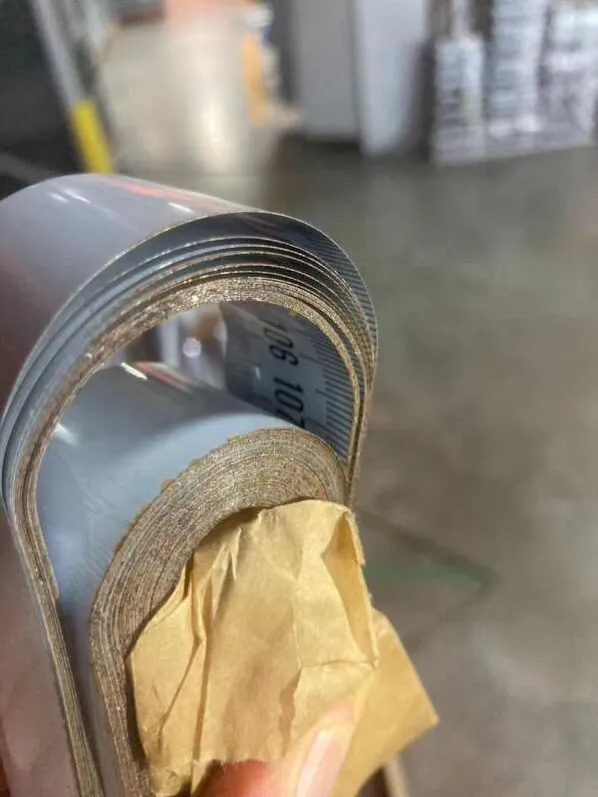
Aug 14, 2026
WHAT ARE CUTTING WHEELS MADE OF?
Learn how abrasive grains, resin bonds, fiberglass reinforcement and additives affect cutting wheel performance and applications.
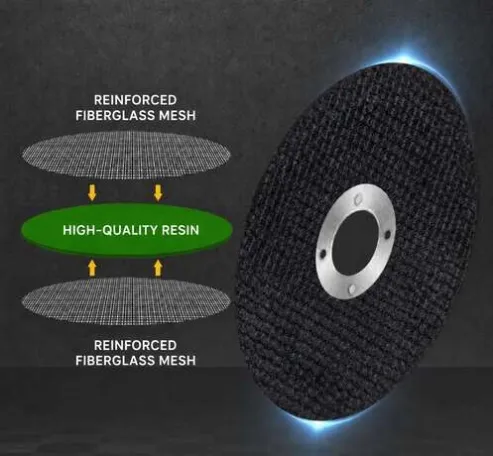
A cutting wheel may look simple, but its performance depends on the combination of abrasive grain, bonding material, reinforcement and other formulation components.
ABRASIVE GRAIN
The abrasive grain performs the actual cutting. Aluminum oxide is widely used for cutting carbon steel and other ferrous metals. Zirconia alumina and ceramic-based grains may be selected when faster cutting, greater durability or longer wheel life is required.
Silicon carbide is a sharp, hard abrasive commonly considered for materials such as stone, masonry, cast iron and certain non-ferrous metals. The correct grain should always be selected according to the workpiece and application.
RESIN BOND
Most cutting wheels used with angle grinders are resin bonded. The bonding material holds the abrasive grains together and allows the wheel to maintain its shape during operation.
The bond must provide a suitable balance between strength and controlled wear. If it is too hard, the wheel may cut slowly. If it wears too quickly, product life may be reduced.
FIBERGLASS REINFORCEMENT
Fiberglass mesh is commonly added to reinforce the wheel and improve its resistance to operating forces. The number and position of reinforcing layers vary according to the wheel type, thickness and intended application.
ADDITIVES AND FILLERS
Additional materials may be included to support cutting performance, heat control, wheel strength and manufacturing consistency. The complete formulation must be developed around the target material, machine speed and required product positioning.
WHY MATERIAL SELECTION MATTERS
Two cutting wheels with the same dimensions may perform differently because of their grain quality, formulation, reinforcement and manufacturing control. Buyers should therefore evaluate more than size and price—they should also confirm the workpiece, application, maximum operating speed and expected cutting performance.