Sep 3, 2026
One Cutting Wheel Does Not Fit Every Material
Which specialised cutting-wheel category is most important in your market?
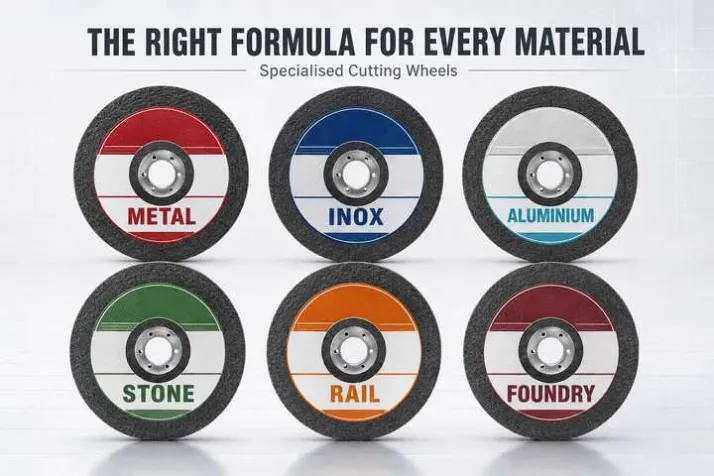
In the past, a general-purpose “metal cutting wheel” could serve many markets. Today, professional users increasingly expect each cutting wheel to have a clearly defined application.
Metal, stainless steel, aluminium, stone, rail and foundry work all place different demands on an abrasive wheel. A formulation that performs well on mild steel may not deliver the same cutting efficiency, safety or finish on other materials.
For example, cutting wheels designed for INOX and stainless steel applications typically require controlled levels of iron, sulphur and chlorine to reduce the risk of contaminating the workpiece.
Aluminium presents a different challenge. Because aluminium is relatively soft, particles can stick to the abrasive surface and clog the wheel. A specialised formulation helps reduce loading and supports a cleaner, smoother and more efficient cut.
Rail and foundry applications require wheels designed for demanding working conditions, while stone cutting calls for abrasives suited to mineral-based materials.
Clear product positioning helps users select the right wheel, improves cutting performance and reduces unnecessary safety risks.
The future of abrasive products is not simply “one wheel for everything”—it is the right formulation for every material.
Which specialised cutting-wheel category is most important in your market?