Aug 16, 2026
CUTTING WHEELS VS. GRINDING WHEELS: WHAT IS THE DIFFERENCE?
Cutting wheels and grinding wheels may look similar, but they are designed for different tasks.
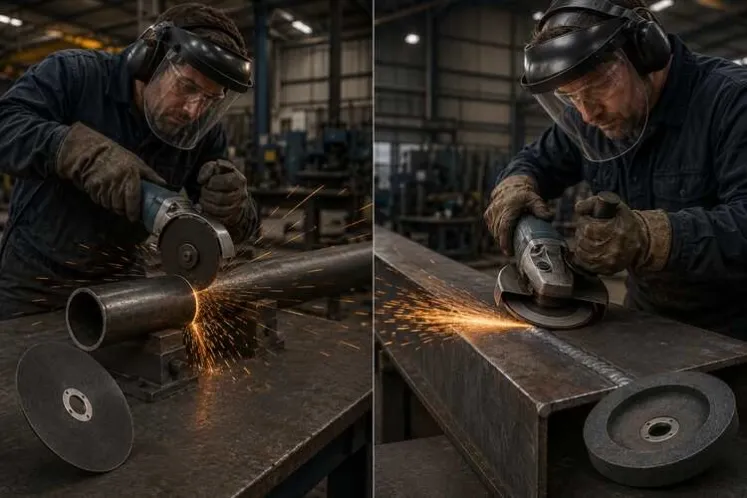
Cutting wheels and grinding wheels are both abrasive tools commonly used with angle grinders. Although they may look similar, they are designed for different operations and should not be used interchangeably.
Understanding their differences helps users select the correct wheel for the job and improves both working efficiency and safety.
WHAT IS A CUTTING WHEEL?
A cutting wheel is a thin abrasive disc designed to cut through materials such as carbon steel, stainless steel, metal pipes, profiles, sheets and reinforcing bars.
Its thin profile allows it to create a narrow cut with relatively low material loss. Cutting wheels are normally used with the outer edge of the disc positioned perpendicular to the workpiece.
Because they are designed primarily for radial cutting, cutting wheels should not be used for heavy side grinding. Applying excessive side pressure may damage the wheel and create a serious safety risk.
WHAT IS A GRINDING WHEEL?
A grinding wheel is thicker and stronger than a cutting wheel. It is designed for surface grinding, material removal and edge preparation rather than separating a workpiece.
Grinding wheels are commonly used to:
- Remove weld seams
- Smooth rough or sharp edges
- Remove excess metal
- Clean and prepare joints
- Shape metal components
- Prepare surfaces before welding or coating
During operation, the wheel is normally held at a suitable angle to the workpiece so that its grinding surface can remove material gradually.
KEY DIFFERENCES
The most noticeable difference is thickness. Cutting wheels are generally thin, while grinding wheels have a thicker reinforced body that can withstand the pressure generated during surface grinding.
Their working directions are also different. A cutting wheel uses its outer edge to pass through the material. A grinding wheel uses a larger part of its surface to remove, smooth or shape material.
In simple terms:
- A cutting wheel separates material.
- A grinding wheel removes material from a surface.
HOW TO CHOOSE THE CORRECT WHEEL
Choose a cutting wheel when the main purpose is to cut metal into separate pieces. It is suitable for cutting pipes, steel bars, metal sheets and structural profiles.
Choose a grinding wheel when the purpose is to remove welds, smooth edges, shape components or prepare a metal surface.
Before use, always confirm:
- Wheel diameter and thickness
- Bore size
- Suitable workpiece material
- Maximum operating speed
- Compatibility with the angle grinder
- Intended cutting or grinding application
SAFE OPERATION MATTERS
Always follow the safety instructions provided with the wheel and power tool. Inspect the wheel before installation and never use a wheel that is cracked, damaged, wet or improperly stored.
The grinder guard must remain correctly installed. Operators should also wear suitable eye and face protection, gloves, hearing protection and protective clothing.
Most importantly, never use a cutting wheel for side grinding unless the product is specifically designed and marked for combined cutting and grinding operations.
CONCLUSION
Cutting wheels and grinding wheels may be manufactured from similar abrasive materials, but their structures and applications are different.
Selecting the correct wheel according to the material, machine and intended operation helps achieve better performance, cleaner results and safer working conditions.
For importers, distributors and hardware brands, specifications, abrasive materials, wheel sizes, labels and packaging options can be selected according to the target market and confirmed application.