What Does 0.5 mm/m Actually Mean?
0.5 mm/m means your level is out by no more than 0.5 mm over a metre. Here's when that matters and when 1.0 mm/m is good enough.
What Does 0.5 mm/m Actually Mean?
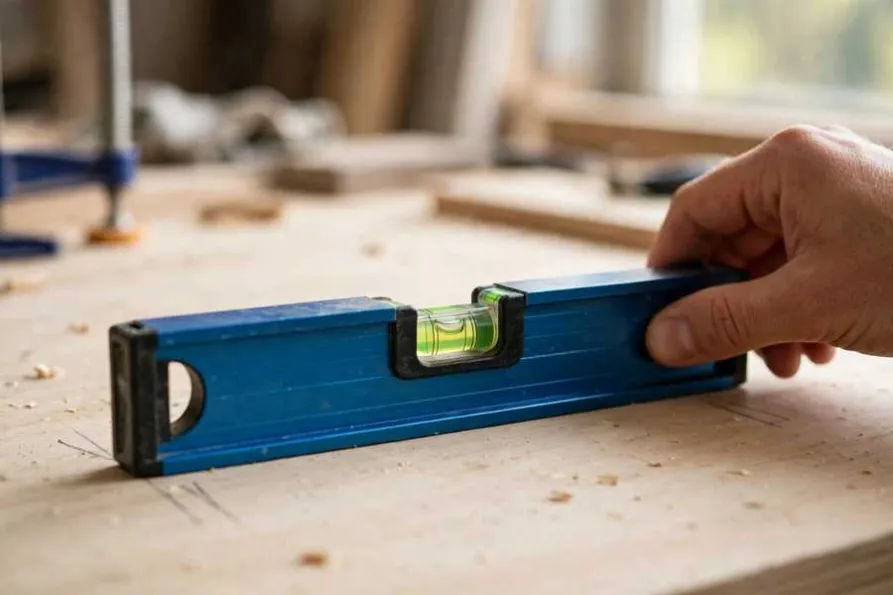
You'll see 0.5 mm/m on most pro levels, ours included. It is really tiny. But here's what it actually means on a job.
Over one metre, the level can't be out by more than 0.5 mm. About as thick as a business card.
On a 600 mm level, that's 0.3 mm. On a 1000 mm level, the full 0.5 mm. You won't see that with your eye. You'll see it at the end of a run, though.
For example you're fitting kitchen units, three metres long. A 0.5 mm/m level can leave you about 1.5 mm out, end to end. That's the gap you notice when the worktop goes on. A 1.0 mm/m level? About 3 mm out over the same run. Now you're packing things out, wondering what went wrong.
So when do you need 0.5?
Hanging a picture, putting up a shelf, general DIY — 1.0 is fine. Nobody's going to notice.
Carpentry, tiling, kitchens, doors and windows, anything where a small slope shows up later — that's when most buyers want 0.5.
One thing, though. Don't buy on the number alone. A level can say 0.5 on the box and still read wrong if the body's bent or the base isn't flat. Check the body first, then do the flip test. We've written about both already.